
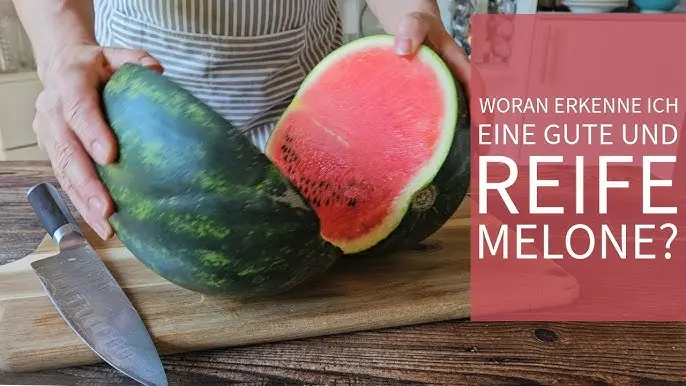
Nothing evokes summer quite like a cold, juicy watermelon. But who hasn’t experienced this? You’re looking forward to that first slice – and then the flesh is pale, watery, or tasteless. The reason: The melon simply wasn’t ripe. However, there are clear signs that indicate when a watermelon is ripe and which characteristics truly point to sweetness and flavor.
This article will tell you how to recognize a ripe watermelon , what mistakes are often made when buying one, and what insider tips even experienced gardeners use to determine the perfect ripeness.
Why the ripeness level is so crucial for watermelons
Watermelons belong to the gourd family and are so-called “non-ripening” varieties. This means they do not develop any additional sugar after harvesting. An unripe watermelon will therefore never get sweeter – no matter how long you leave it.
Therefore, it’s important to look (and listen) carefully when buying or harvesting a watermelon. Only a fully ripe watermelon has the intense, honey-sweet aroma and the bright red color that you want in summer.
How to recognize a ripe watermelon – the most important characteristics at a glance
There are several external and acoustic characteristics that allow you to reliably determine whether a watermelon is ripe. Color, shape, weight, sound, and even the stem all play a role.
1. The color – matte instead of glossy
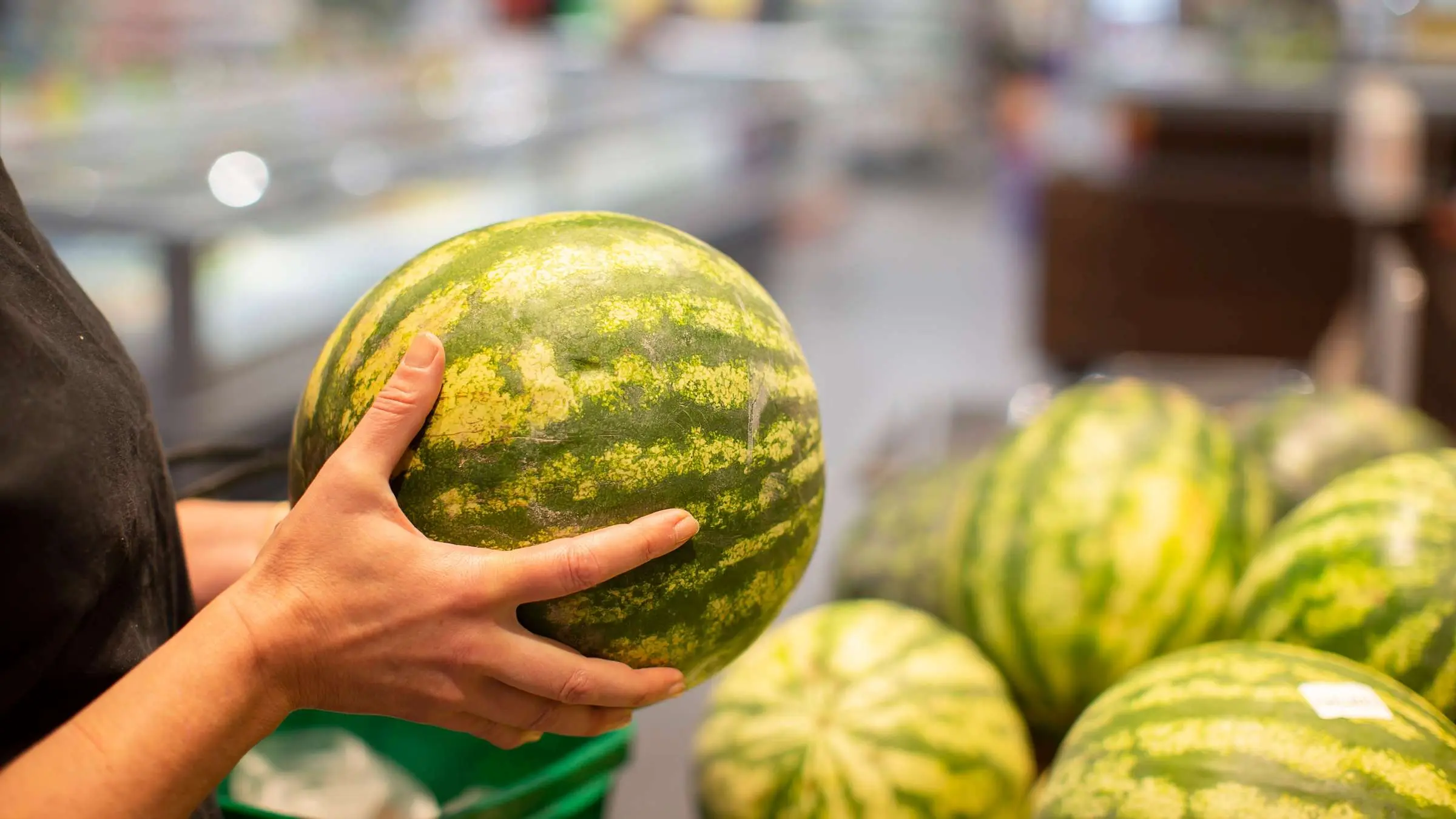
A common misconception: Many buyers choose shiny, smooth melons because they look “fresh.” But the opposite is true. A ripe watermelon has a matte, slightly dull rind .
The shine disappears as the fruit ripens because the wax layer becomes thinner. A highly glossy surface therefore indicates an unripe fruit.
The green color also changes: In ripe melons it is richer and darker, the stripes appear clearly defined.
2. The yellow spot – the melon’s sunbathing area
As each watermelon grows, one side lies on the ground. This spot is called the “ground spot” or “field spot” .
The color of this spot is one of the most reliable indicators of ripeness:
-
Light yellow to cream-colored = ripe and sweet
-
Whitish or greenish = still unripe
The more intense the yellow tone, the longer the melon has soaked up the sun in the field – and the sweeter it usually is in taste.
3. The sound test – the famous “knock trick”
A classic among market traders: the knock test . This involves lightly tapping the bowl with your knuckles.
-
If the tone sounds deep, dull and hollow , the melon is ripe.
-
If it sounds bright or metallic , it is unripe.
The reason: In ripe fruits, the flesh is firmer and more elastic, which dampens the sound. In unripe melons, the interior is still too dense – the sound is higher-pitched and “empty”.
4. The shape – uniform and symmetrical
The shape can also reveal something about the ripeness. A uniformly round or oval watermelon is usually well-grown and balanced in taste and texture.
If, on the other hand, it shows bumps or irregular bulges, this may indicate uneven watering or poor growing conditions – which often leads to fibrous pulp.
5. The weight – heavier than it looks
A ripe watermelon contains a lot of sugar and water – that’s why it feels surprisingly heavy for its size .
If you’re holding two similarly sized melons, choose the heavier one. It usually has a higher water content and is juicier.
Dry or unripe fruits, on the other hand, are lighter and sound “empty” when tapped.
6. The handle – a small but important detail
Another clue is the condition of the stem .
-
Dry, slightly curled stem = harvested ripe
-
Green, fresh stem = picked too early
Some farmers can tell the perfect time to harvest just by looking at the stem. It dries out one to two days before the melon reaches its maximum sugar content.
When is a watermelon ripe in the garden?
Growing your own watermelons requires patience and good timing. In Central Europe, the ripening period – depending on the variety and weather – lasts between 70 and 100 days after sowing .
A sure sign is the change in the tendrils: as soon as the small tendrils or leaves near the fruit dry out , the melon is usually ready to harvest.
The sound test also works perfectly here. A dull thud when tapping the bowl indicates: Now is the right moment.
The best time to harvest melons is in the late morning, when they are still cool but dry.
What happens if you harvest too early?
A watermelon picked too early will not ripen further – its sugar and flavor content remains at the level of harvest.
This leads to:
-
watery taste
-
pale pink flesh
-
less aroma
The consistency also differs: unripe fruits are often hard or grainy inside, while ripe melons are soft and juicy without falling apart.
What does the inside of a ripe watermelon look like?
You can recognize a ripe watermelon immediately after cutting it open:
-
The flesh is deep red to bright pink .
-
The seeds are dark brown or black – in unripe fruits they are usually white.
-
The juice has a slight sheen and a sweet smell.
The resistance to cutting is also an indicator: A ripe melon can be easily cut with a knife without the flesh breaking.
Common mistakes when buying watermelons
Many buyers are misled by apparent quality features when making a purchase. Here are some typical misunderstandings:
-
“The bigger, the better”: Wrong. Large melons are often more watery, while small ones have a more concentrated flavor.
-
“Shiny means fresh”: On the contrary – ripe melons have a matte skin.
-
“Seeds mean poor quality”: False. Seeds are a sign of natural ripeness, while seedless varieties have often been altered through breeding.
Watermelons and ripeness vary depending on the variety.
Not all melons ripen at the same rate. Some varieties retain light-colored flesh or a thinner rind even when fully ripe.
Here is an overview of common varieties and their characteristics:
| Sort | color of the pulp | Typical ripening time |
|---|---|---|
| Crimson Sweet | Deep rot | 80–90 days after sowing |
| Sugar Baby | Dark red, compact | 70–75 Takes |
| Yellow Doll | Yellowish, sweet | 65–70 Takes |
| Charleston Gray | Bright red, large fruit | 85–95 Take |
These differences show that when assessing ripeness, one should not rely solely on color, but on a combination of several characteristics .
Tips for storing ripe watermelons
A whole, uncut melon will keep for about 7 to 10 days at room temperature , and for up to three weeks in the refrigerator .
After cutting, it should be wrapped in cling film or stored in an airtight box in the refrigerator – ideally for no longer than 3–4 days.
A trick from the restaurant industry: Melon pieces in a closed container with a few drops of lemon juice stay fresh and aromatic for longer.
Conclusion – When is a watermelon ripe?
A watermelon is ripe when it has a matte rind, a yellowish spot at the bottom, a dull sound when opened, and a dry stem . It feels heavy and smells subtly sweet – exactly how summer should taste.
Anyone who knows these characteristics will never be disappointed again when cutting into a melon. Whether buying one or growing it in your own garden – the right degree of ripeness determines taste, juiciness, and sweetness.
FAQs
-
When is a watermelon ripe?
When it has a yellow spot on the bottom, a dull sound when tapped, and a matte rind. -
How do I recognize a ripe watermelon in the garden?
When the stem dries out and the sound is hollow when tapped, it is ready to harvest. -
Can an unripe watermelon ripen?
No, watermelons do not ripen after picking – they remain as sweet as when harvested. -
What color is the flesh of a ripe melon?
Depending on the variety, deep red or pink, with dark seeds and glossy juice. -
How do I properly store a ripe melon?
At room temperature, cut into pieces, in the refrigerator – ideally in an airtight container.









Leave a Reply